If you’ve decided to build, you’ve already made the hard call. The next question is how. For a long time the default answer in NSW was a traditional, built-on-site home, and modular was something you’d consider for a granny flat or a remote site where getting trades was a nightmare.
That’s changed. Modular construction has grown up, and for a lot of people building in regional NSW it now makes more sense than the traditional route. But “makes more sense” depends entirely on what you care about, so here’s an honest look at where the two methods actually differ.
The timeline difference is real, and it comes down to weather
The biggest difference between the two methods is where the work happens. A traditional home is built on your block, exposed to everything the seasons throw at it. A modular home is built inside our factory in Wagga Wagga, then delivered and installed on site.
That sounds minor until you’ve watched a traditional build sit idle through a wet winter, waiting for the slab to cure before the next trade can start. Rain delays, trades booked on three other jobs, materials turning up late. These are the things that quietly stretch a twelve-month build into eighteen.
Because we build in a controlled environment, weather stops being a variable. Our trades are all in one place, the materials are on hand, and the work keeps moving regardless of what’s happening outside. Site works and the factory build can also happen in parallel rather than one after the other, which is time you simply can’t claw back on a traditional site.
Cost certainty matters more than the headline price
Most people comparing build methods start with price per square metre. It’s the wrong place to start.
The number that actually affects your life is the final one, the figure you pay when the keys are handed over. On a traditional build, the gap between the quote and the final price is where a lot of the stress lives. Variations, provisional sums that blow out, delays that cost you rent while you wait. The longer a build runs, the more chances there are for the budget to move.
Modular doesn’t make a home magically cheaper, and we’d be wary of anyone who promises that. What it does is tighten the gap between what you’re quoted and what you pay. Building in a factory means predictable labour, less waste, less weather risk, and a fixed construction window. You know what you’re getting, and roughly when.
Quality of finish: controlled beats exposed
There’s an old assumption that modular means lower quality, a “kit home” reputation that hasn’t been true for years. If anything, the controlled environment works in your favour.
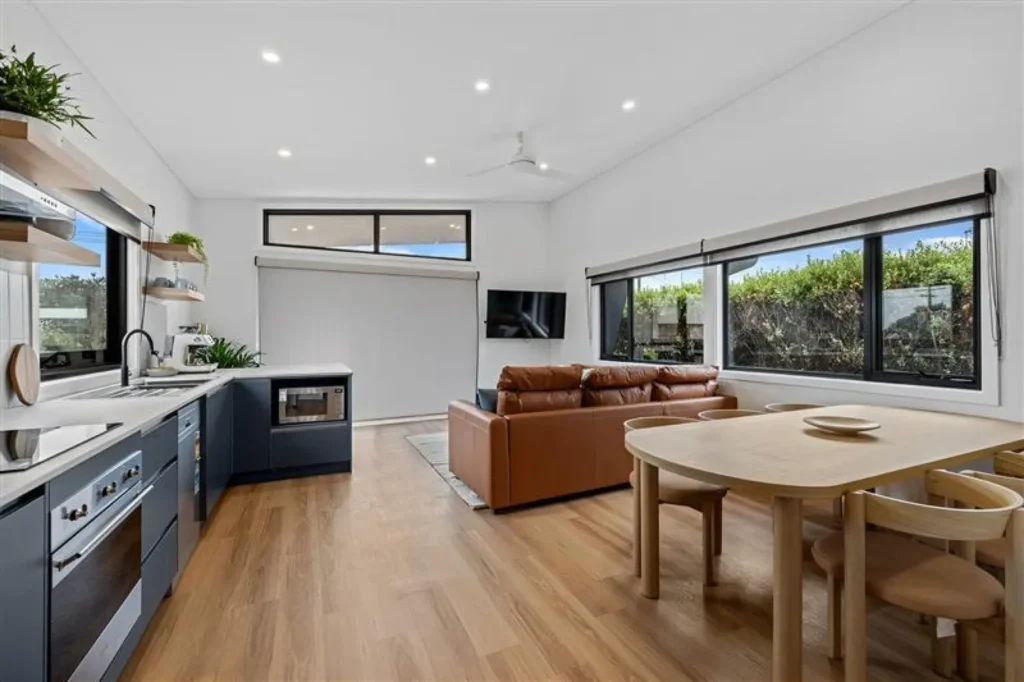
Materials aren’t sitting out in the rain. Timber isn’t absorbing moisture before it’s installed. The same team builds in the same conditions every day, which is exactly the consistency that produces a clean, square, well-finished home. Everything comes through complete: kitchen, bathrooms, floor coverings, plumbing and electrical, all done before your home leaves the yard.
Traditional building can absolutely produce a beautiful result. But it’s working against more variables, and more variables mean more places for quality to slip.
On-site disruption is where modular really pulls ahead
This is the difference people underestimate until they’ve lived through a traditional build. Months of trades coming and going, deliveries, noise, dust, an open site, and a slow trickle of progress you watch every single day.
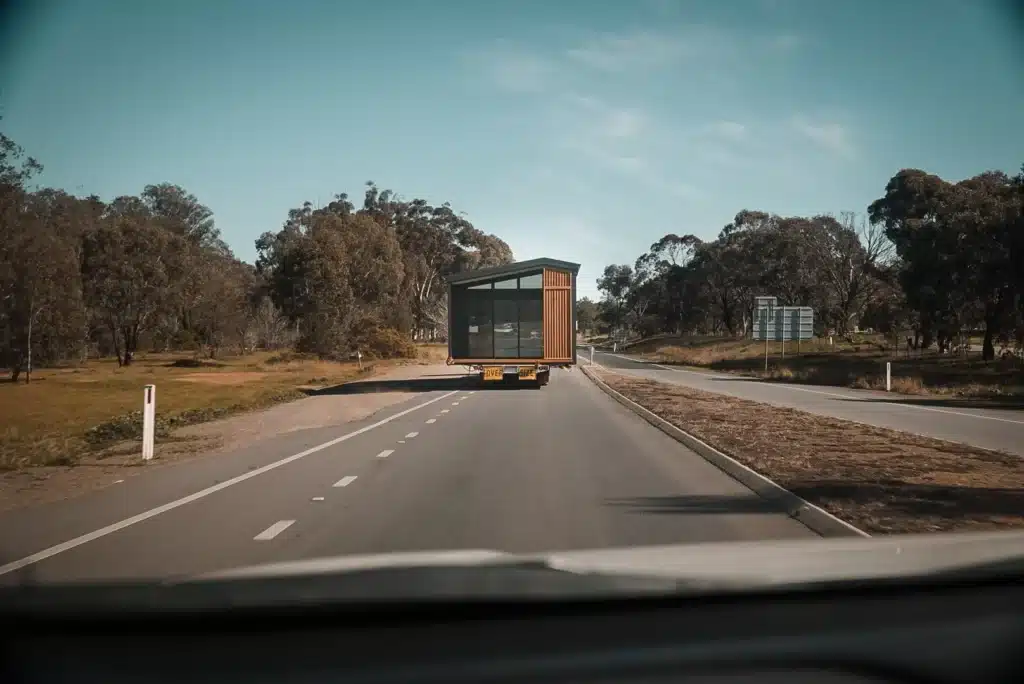
With a modular build, the disruptive part happens in our factory, not on your land. The on-site phase is short by comparison. We transport, deliver and install, and the home arrives largely complete. If you’re building near neighbours, on a working rural property, or anywhere a long open site is a genuine hassle, this is a real quality-of-life advantage.
NSW is changing the rules in modular’s favour
Here’s something a lot of people building in NSW haven’t caught up on yet. For decades, prefab and modular homes sat in an awkward gap in the planning system, with no proper legal definition and a tangle of separate approvals. That’s now changing.
The NSW Building Bill 2026 formally recognises prefabricated and off-site construction in law for the first time, making NSW the first state in Australia to do so. It introduces a clearer, more consolidated approval pathway, and a Pattern Book of pre-approved designs that can qualify for a much faster complying development certificate. The changes are expected to commence from 2027, with the supporting regulations being finalised over 2026 and 2027, so the current approval pathways still apply for now.
Why does this matter if you’re deciding how to build? Because the direction of travel is clear. Government policy is actively moving to make modular easier and faster to approve, not harder. The Productivity Commission has pointed to modular methods as a way to build significantly faster than traditional on-site construction, which is exactly why it’s being backed at a policy level as part of the response to the housing shortage.
We keep a close eye on these reforms because they shape how we deliver, and we’re always happy to talk through what the current rules mean for your block and your timeline. For the official detail, the NSW Planning Portal is the place to verify what applies right now.
So is it worth making the switch?
If you’ve built before, you already know which parts of the process you’d happily never repeat. For most people that list looks like: the timeline blowing out, the budget creeping up, and the months of disruption. Those are precisely the three areas where modular has the clearest edge.
Where a traditional build still wins is on highly bespoke, architecturally complex one-offs, or on extremely tight sites where craning in modules isn’t practical. We’ll always tell you honestly if your project is one of those.
But for a well-designed home delivered with more certainty, less stress, and far less time spent watching an open site, modular has quietly become the smarter default. It’s all we do, and we’ve built our whole process around getting those three things right.
If you’re weighing it up, the best next step is to see the homes in person and talk through your block and your timeline. You can browse our designs, read more about why we build the way we do, or download our brochure to take the details away with you.
We’re licensed for NSW and deliver right across the state, and we’re always happy to give you a straight answer about whether modular is the right fit.