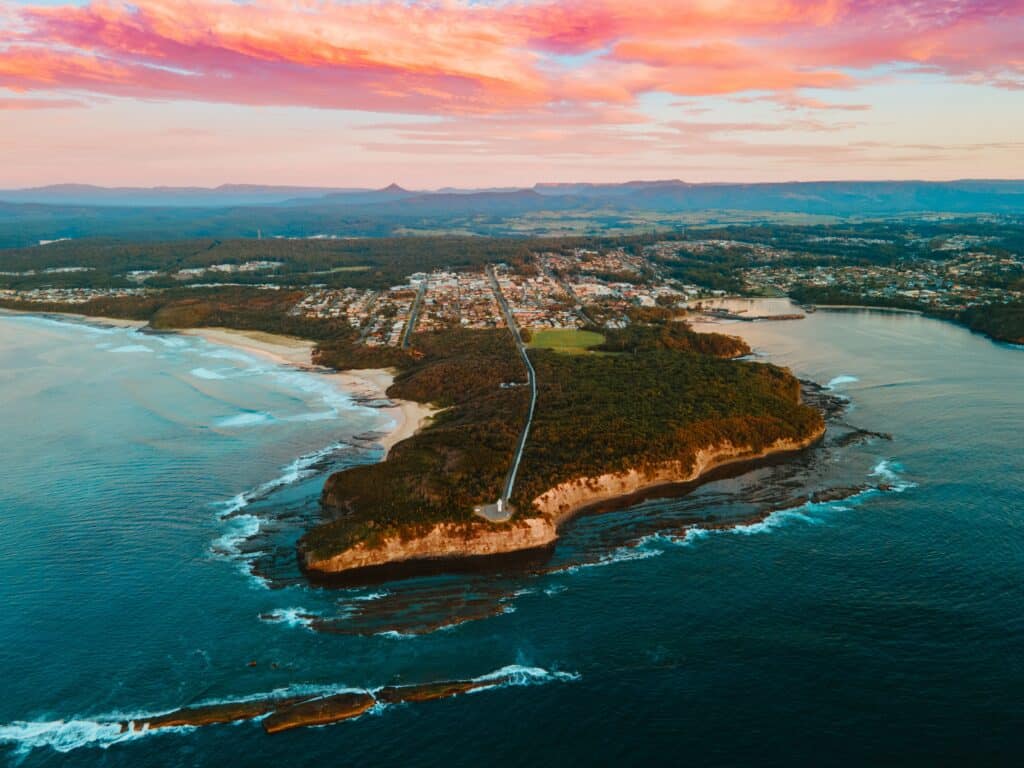
The NSW South Coast is one of the best places in the country to own a home, and one of the trickier places to build one. If you’ve started looking into it — whether it’s a forever home at Mollymook, a sea change near Narooma, or a holiday place you’ll rent out between visits — you’ve probably already hit the same hurdles most people do: builders booked out for the better part of a year, quotes that vary by eye-watering margins, and a build timeline that keeps stretching the longer you wait.
It’s absolutely doable. But the coast throws up a particular set of challenges, and the options are broader than most people realise when they start ringing around. Here’s an honest look at what building down here actually involves, and the approach a lot of people don’t think to consider.
Why building on the South Coast is its own challenge
Some of this will be familiar if you already live in the area, but it’s worth setting out plainly, because each of these quietly feeds into your final cost and your timeline.
Trades are stretched and in demand. The South Coast’s popularity cuts both ways. The same lifestyle that makes people want to build here means local builders, plumbers and electricians are in high demand and often booked months ahead, and that pressure pushes prices up and timelines out before you’ve settled on a single detail of your actual home.
The coastal environment is demanding. Salt air, high winds, driving rain and, increasingly, serious bushfire exposure along the bush-meets-beach fringe. Homes on the coast have to be built to stand up to all of it — which means BAL ratings on many blocks, corrosion-resistant materials, and construction standards that genuinely matter when the first big easterly rolls through.
Holiday-town logistics add up. Narrow coastal streets, tight beachside blocks, peak-season road congestion and limited local supply can all complicate a build. Getting materials and trades to site at the right time is harder than it looks on a map, and every delay is money.
Your options, honestly assessed
When most people picture building, they picture a traditional on-site build — trades turning up to the block day after day until a house exists. It’s the default everywhere, and for good reason: it works, and it gives you total control over every decision along the way.
On the South Coast, though, that default collides head-on with everything above. Every week of coastal weather is a week your on-site build can stall. Every in-demand local trade is one you’re queuing for. And building in a popular holiday region, often on a difficult block, is exactly where an exposed, drawn-out site build is most at the mercy of things outside your control.
There’s a second option that sidesteps a lot of that, and it’s the one people tend to overlook — usually because they picture something smaller or more basic than what they actually have in mind.
The option most people overlook: building off-site
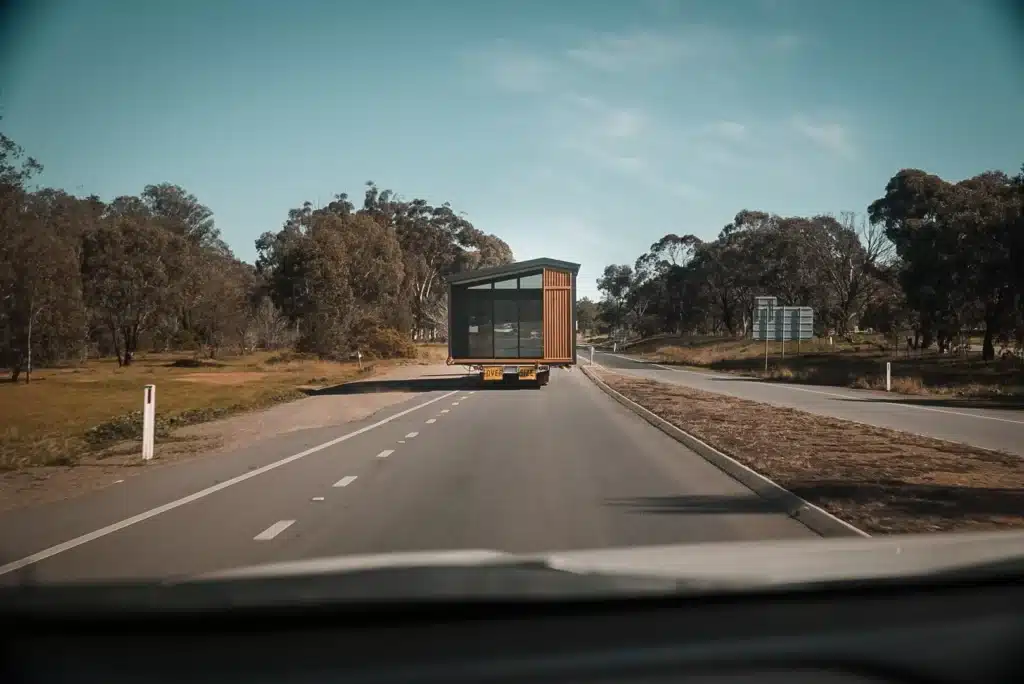
Modular construction means your home is built in a controlled factory environment and delivered to your block largely complete — kitchen, bathrooms, flooring, the lot — then installed in a matter of days rather than months.
Run back over what makes the South Coast hard to build on, and it’s clear why this matters here specifically. The coastal weather that would stall an on-site build has no effect on a home being built indoors, inland, under cover. The local trades shortage is absorbed by the factory rather than fought over on your block. And the peak-season logistics that complicate a long on-site build shrink to a single, well-planned delivery and install.
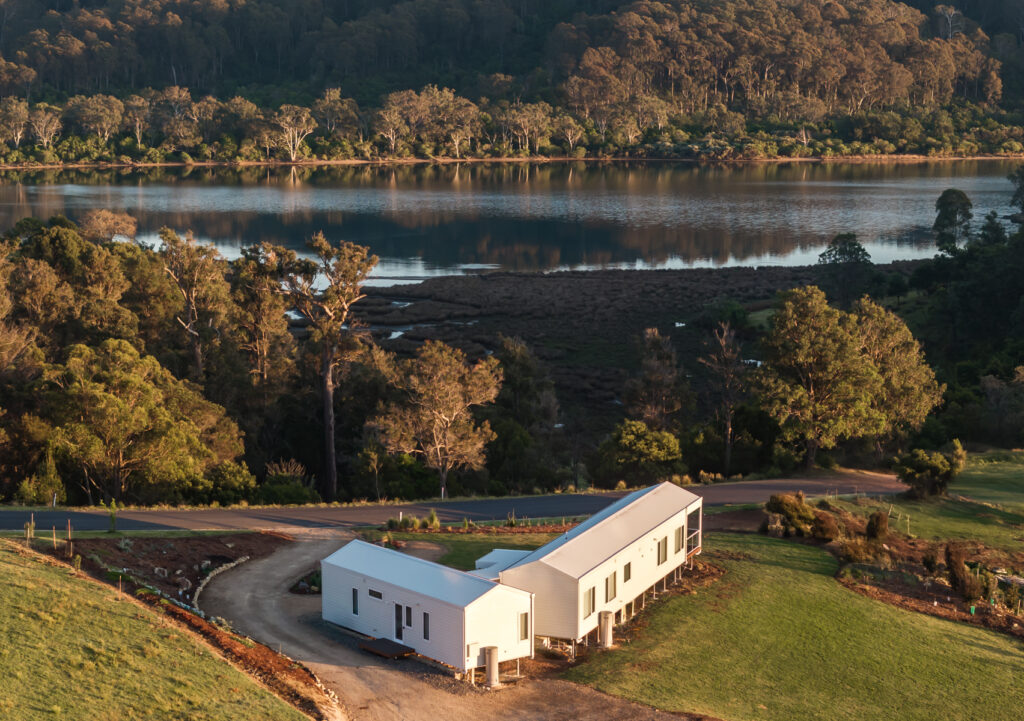
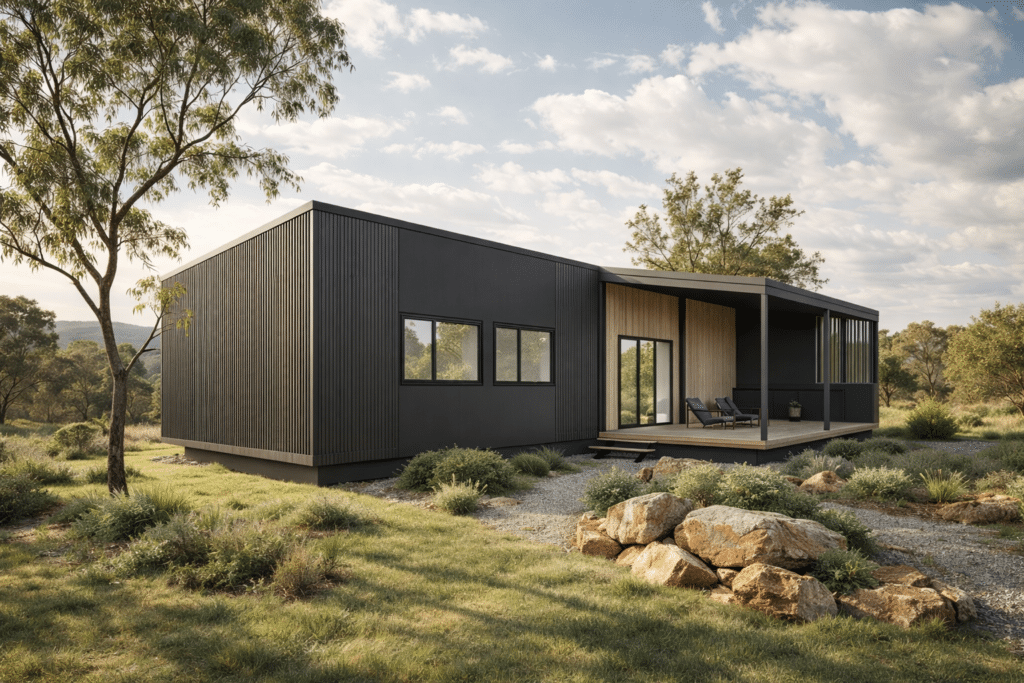
It’s worth being clear on one thing, because it’s the assumption that stops people even looking: a modern modular home is not a transportable cabin or a demountable. Ours are architect-designed, permanent homes, built to the same standards as anything built on-site — and the coastal requirements, from BAL ratings to corrosion-resistant specification, are engineered in from the first drawing rather than patched on later.
Built for coastal conditions from the start
This is where building off-site genuinely pulls ahead for a South Coast block rather than just matching a traditional build. Bushfire (BAL) ratings, wind ratings, salt and corrosion resistance, and strong thermal performance can all be specified into the home from the outset, in a factory set up to do exactly that and check it at every step.
A well-specified coastal home shrugs off the salt air, stands up to the wind, and meets the bushfire rating your block requires — and getting all of that right is far easier when it’s part of the original design than when it’s being improvised on an exposed site between weather events. It’s the sort of detail that’s hard to control in the field and comparatively straightforward under a factory roof. Which, when your block is a few hundred metres from the surf, is rather fab.
What this means for your budget and timeline
The two things everyone actually wants to know are what it’ll cost and how long it’ll take. Building off-site won’t magically make a South Coast home cheap — good homes in sought-after places never are — but it does two things that count for a lot here.
It gives you cost certainty. Far more of your build is locked in up front, rather than exposed to months of weather, in-demand local trades and the price creep that comes with a long on-site job in a popular region. And it compresses the part that actually happens on your block from many months to a matter of days — which, in a holiday town where every peak season is a season of disruption, is close to the whole point.
So where do you start?
If you’re weighing up building on the South Coast, the smartest first step is a conversation about your block, your site’s requirements, and what you’re actually trying to build — before you start collecting quotes that vary by hundreds of thousands of dollars with no clear reason why.
We’re licensed for NSW, we build for exactly these conditions, and we deliver right across the South Coast. You can browse our range of designs, read more about how and why we build the way we do, or get in touch for a straight answer about whether building off-site stacks up for your block. No jargon, no pressure — just a clear picture of your options in a part of the world that’s worth getting right.